





The sea speaks first.
Before the horses, before the lances, before the thunder of hooves across red earth — are the worms. The nyale rose from the depths at the turn of the rainy season, glowing and numinous, spilling onto Sumba's shores in the thousands. The elders, as per every year, read them the way other men read sky or scripture. In the Marapu world, they are a message sent from the ancestors, from the woman who once drowned long ago and became the sea itself, returning each year in the only form the living can still hold.
Only once the worms have spoken does the Pasola begin.
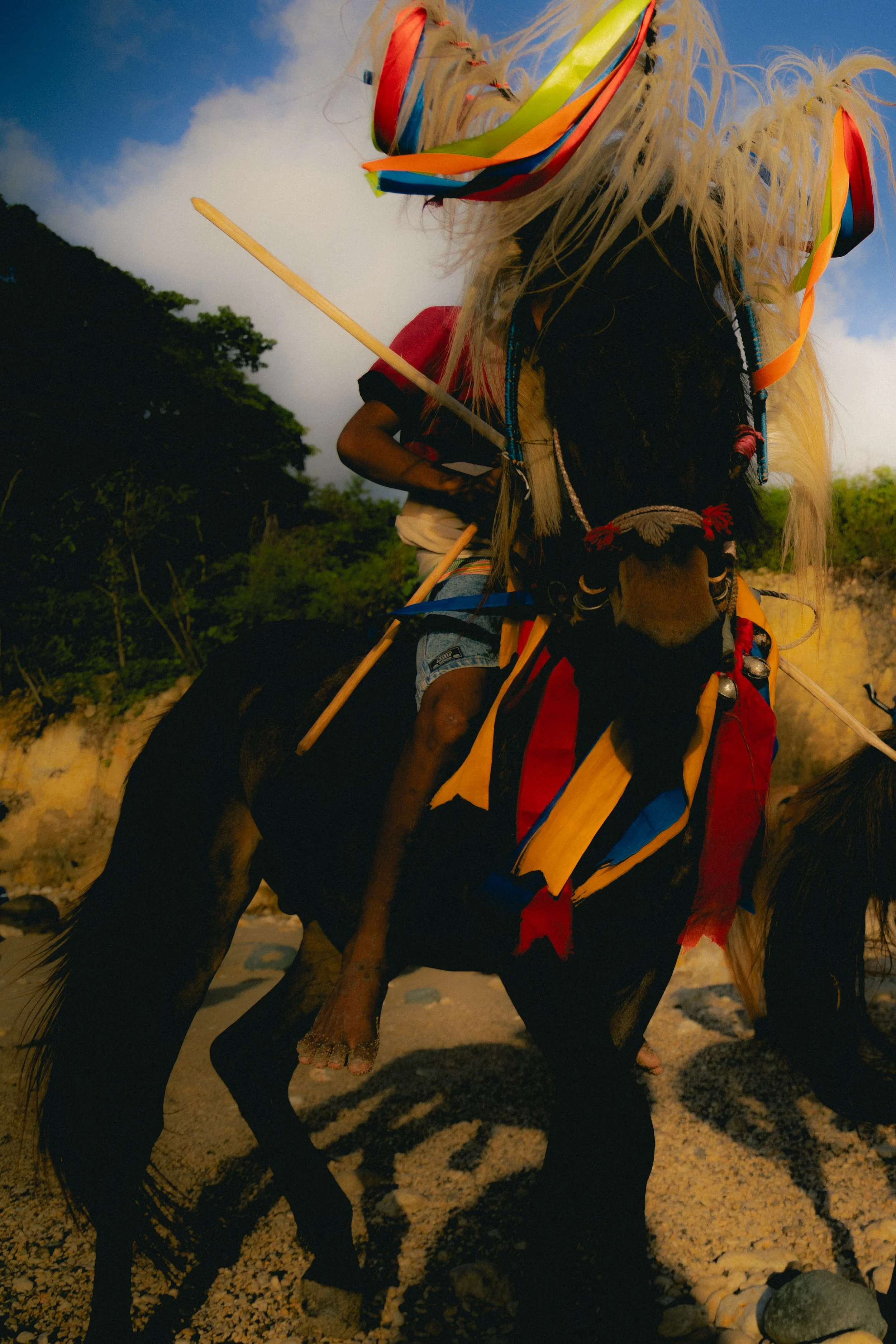
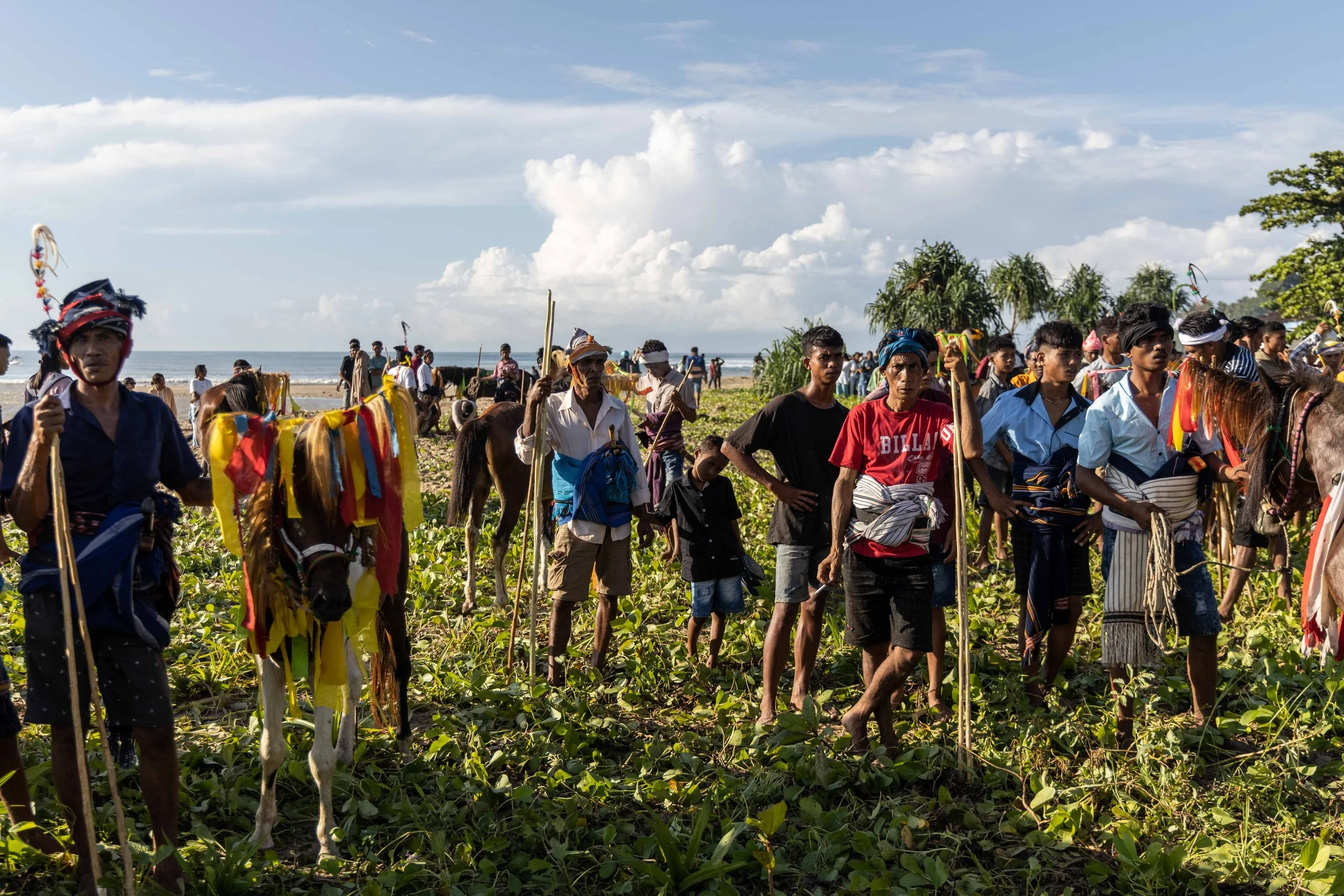
The warriors arrive on horseback dressed in ikat so vivid it seems to sear the air — textiles whose patterns carry clan lineage and spirit-world affiliations in every knotted thread. Moving across the open field in formations that are both battle and prayer. Lances arc through the damp air. Horses thunder, fall, dash. Dust rises in red curtains against the Sumbanese sky. To outside eyes, it reads as violence, but for the Sumbanese, it is but vocabulary — each throw spelling a song addressed to the Marapu, each wound a lyric completed. Blood must fall on this earth, in reciprocity with the natural forces and balance of this universe. The land feeding the living; the living feeding the land.
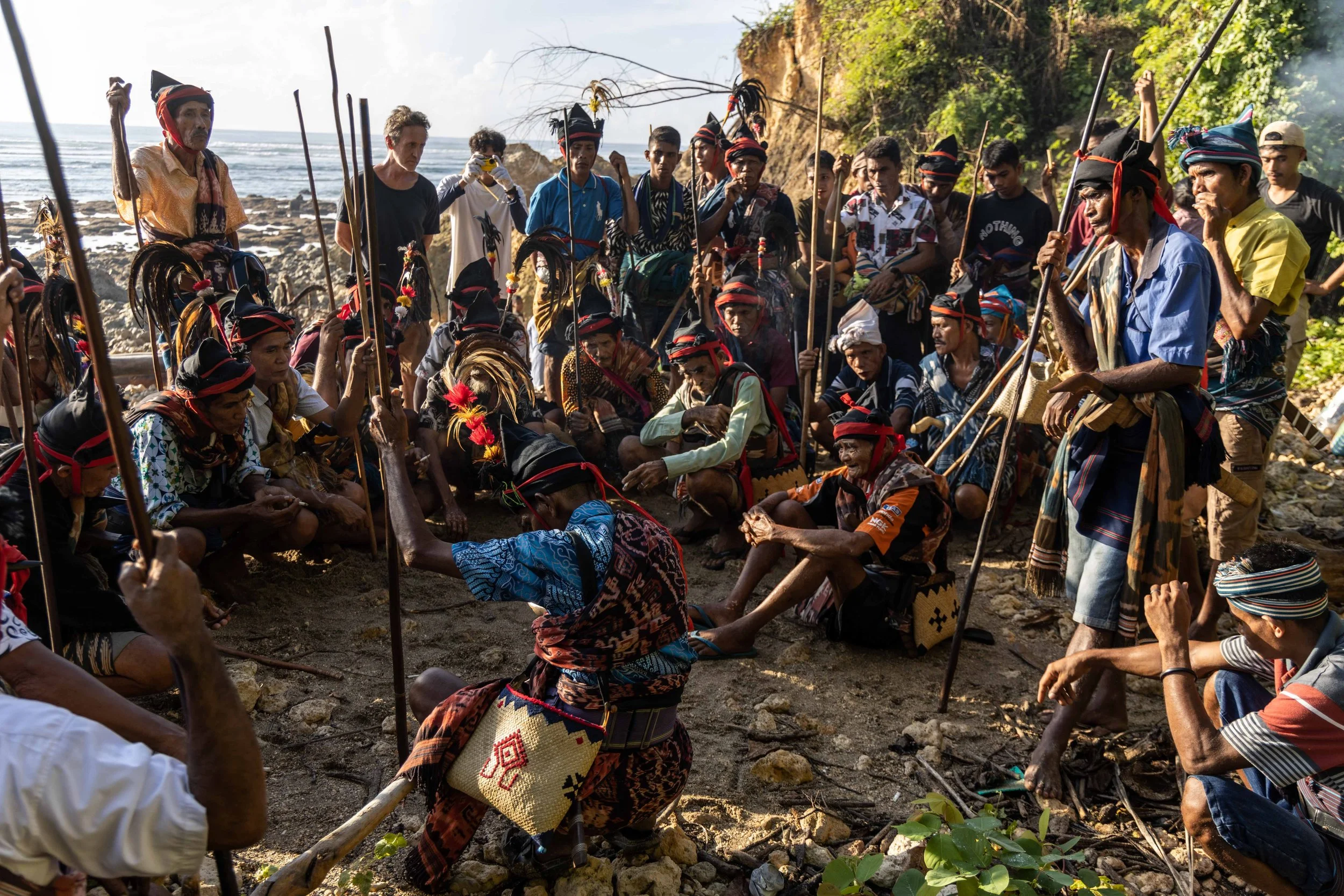
The ratos, or shamans stand apart, reading what the ancestors are saying back, as the Marapu cosmology doesn’t have partition between the sacred and the profane, no border between the living village and the realm the dead inhabit. The field where the Pasola is fought is the same field where yams will grow. The warriors who bleed are the same men who will plant. The spirits are not distant but interested, watchful, ever present in the behavior of horses and the arc of a lance and the abundance of worms on a dark shore.
When the dust settles and the warriors return as the nyale dissolve back into the sea, Sumba exhales.
The land has been spoken to. The ancestors, honored. The harvest will come, or it won’t — but the conversation has been held, which in this world may be what matters most.
The Pasola is dialogue and a song unsung. And every year, on this red-earthed island at the edge of the Indonesian sea, it continues.